Why Most AI Strategies Produce Marginal Gains and What to Do Instead.
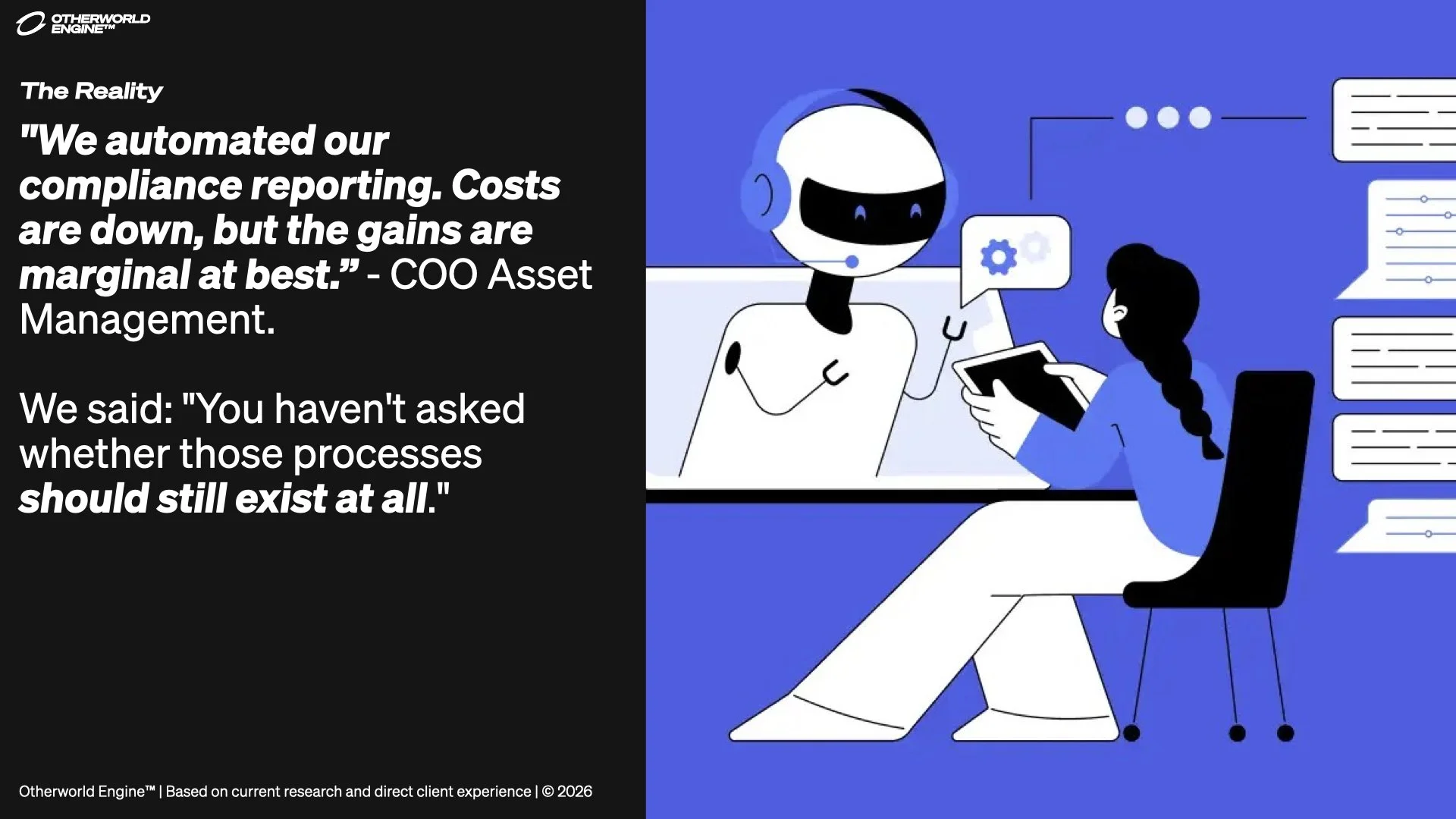
"We automated our compliance reporting. Costs are down, but the gains are marginal at best." A COO at an asset manager told us in a recent meeting. We said: "You haven't asked whether those processes should exist at all.”
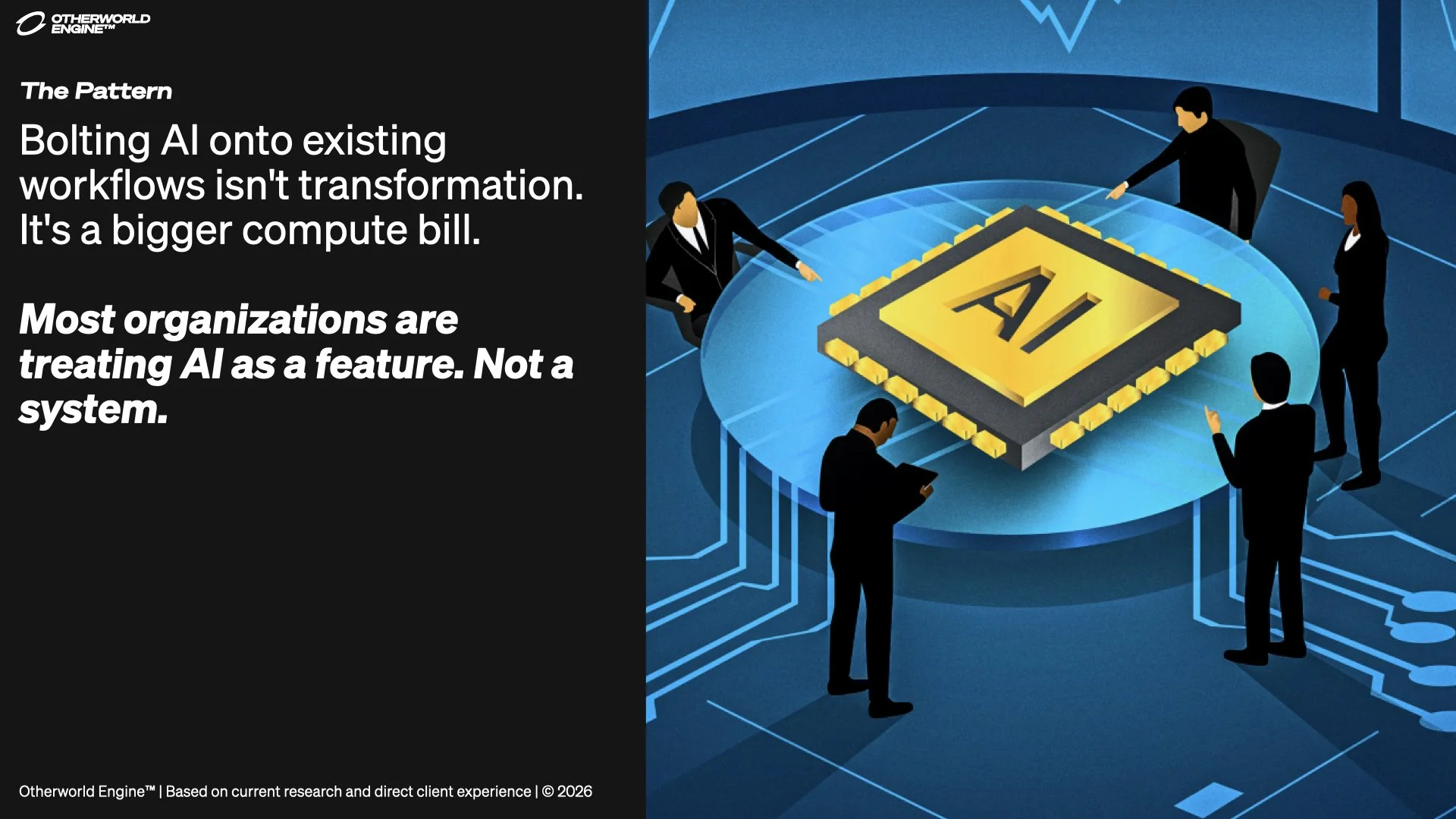
Most organizations are treating AI as a feature. A tool bolted onto existing workflows to squeeze out incremental gains. That's not transformation. That's optimization with a bigger compute bill.
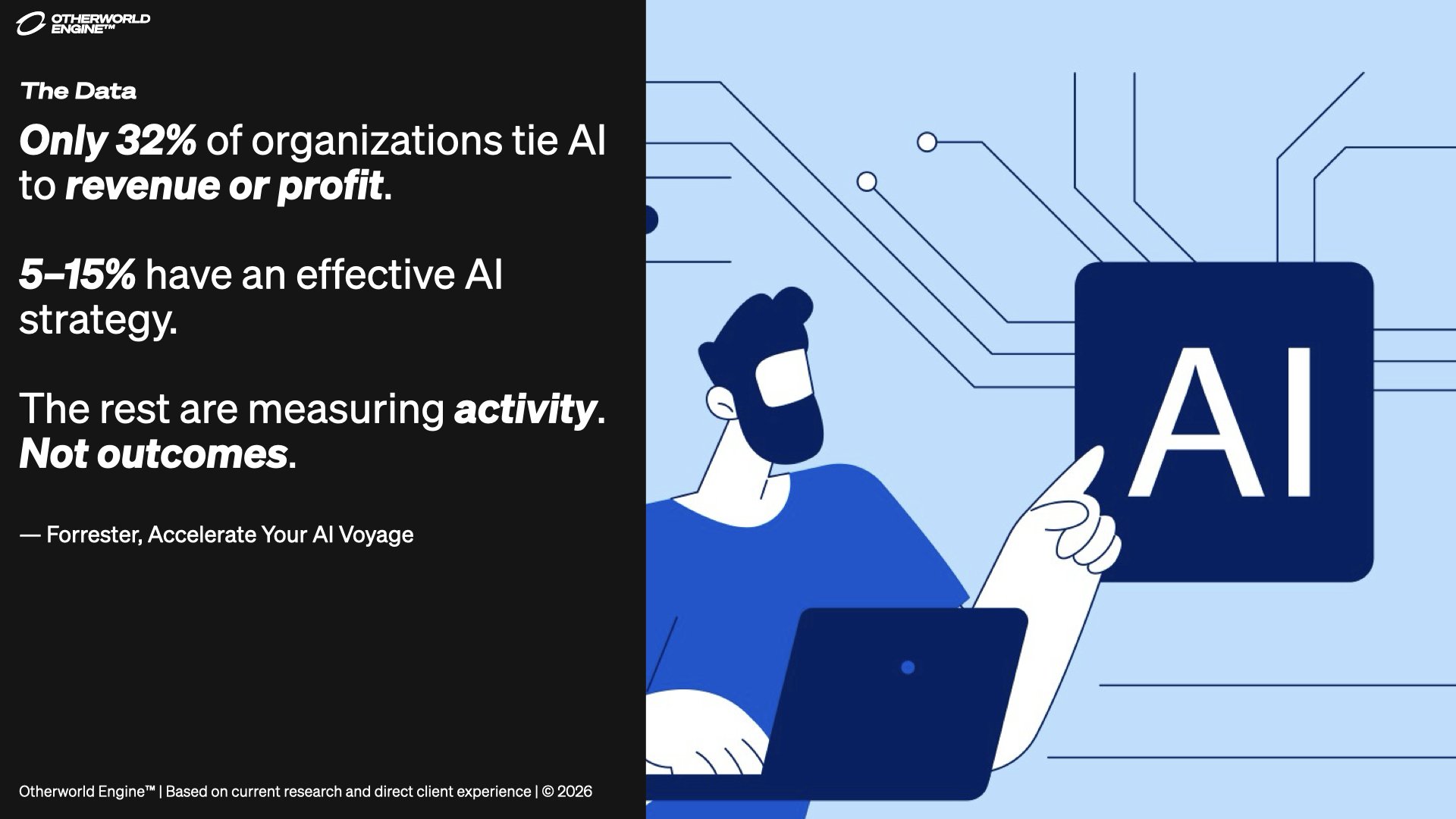
Forrester’s Accelerate Your AI Voyage is clear: only 5–15% of organizations have an effective AI strategy. And only 32% tie AI outcomes to revenue or profit.
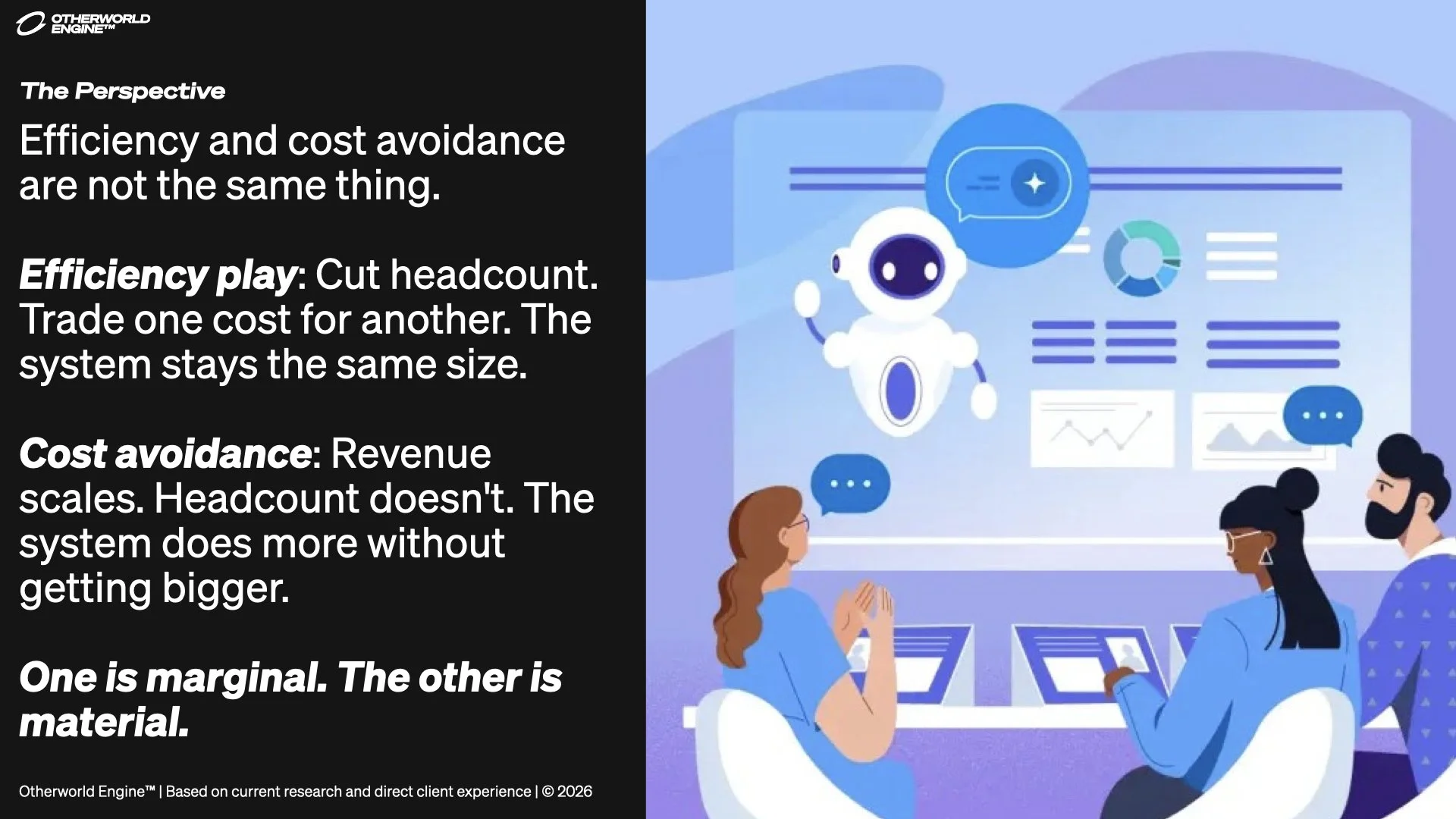
Here's the distinction most CXOs miss: efficiency and cost avoidance aren’t the same thing.
Cutting headcount to offset AI investment is an efficiency play. You're trading one cost for another. Marginal gains at best.
Cost avoidance through workflow reinvention is different. You grow without proportional headcount growth. Revenue scales. The system does more without the system getting bigger. That's material gain.
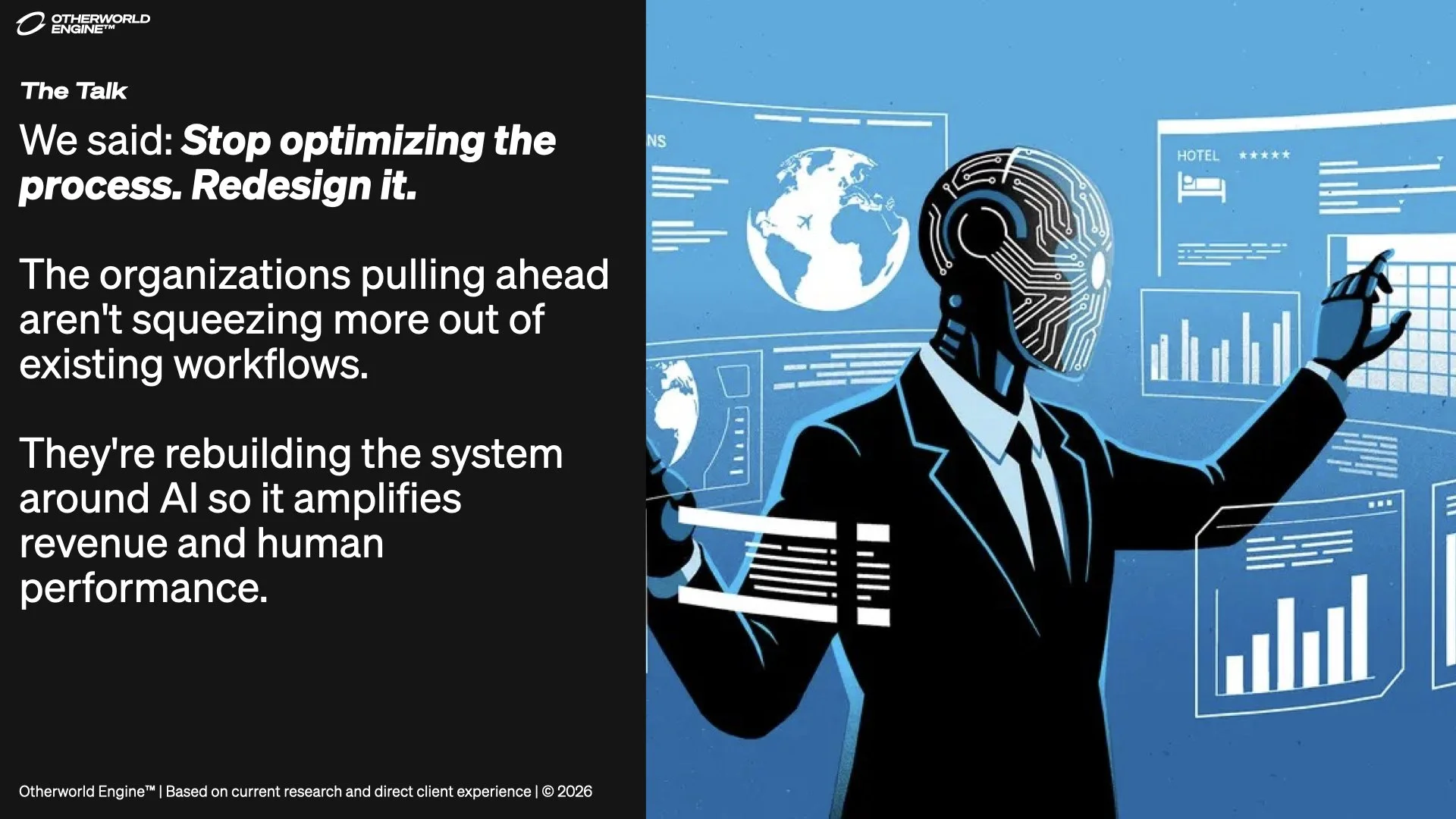
The organizations pulling ahead are redesigning how work happens across every workflow. AI amplifies revenue and human performance, but only when the system is rebuilt around it.
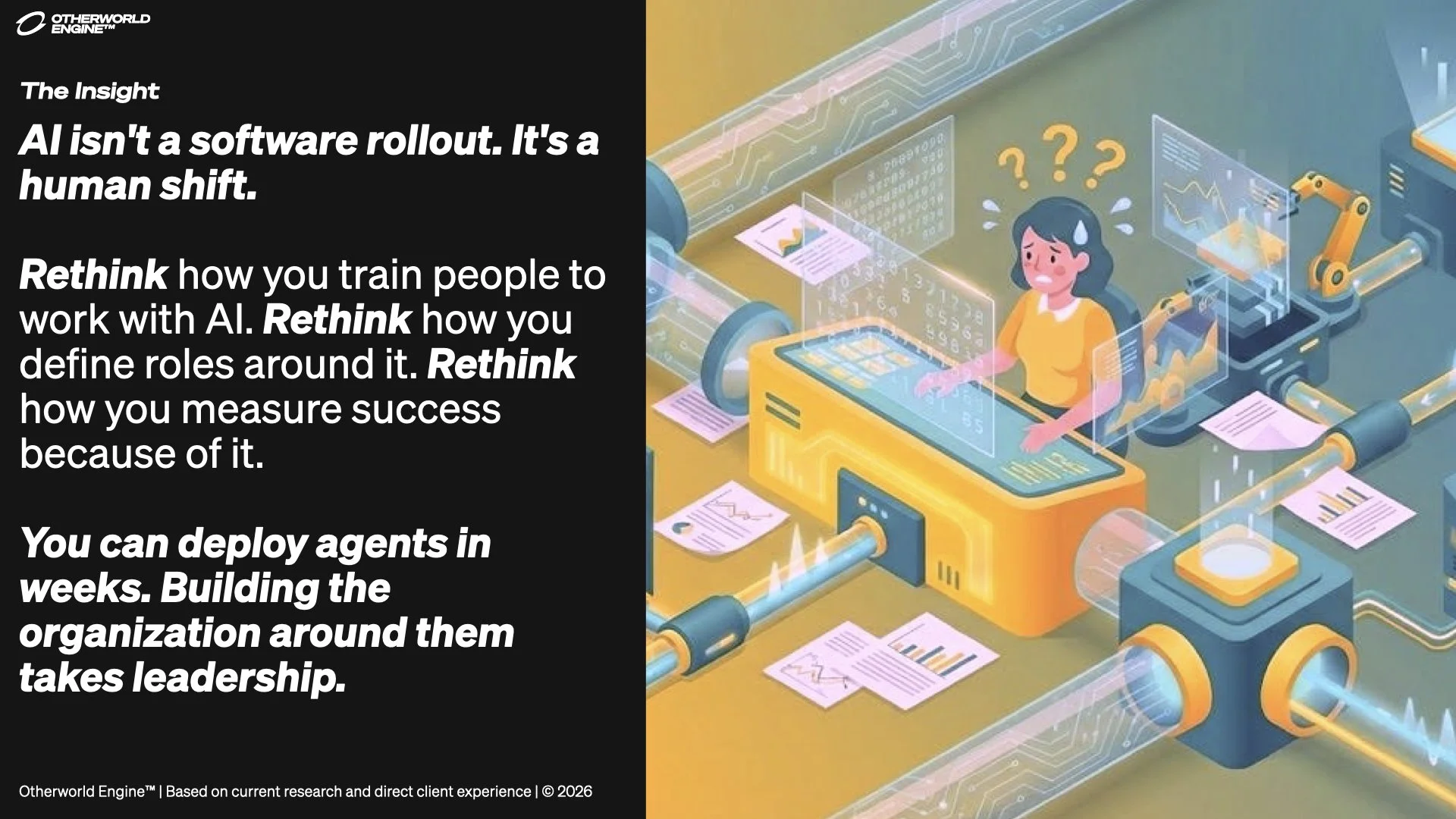
That means rethinking how you train people to work, define roles, and measure success. AI is a human-shift, not a software rollout.
We closed our conversation:
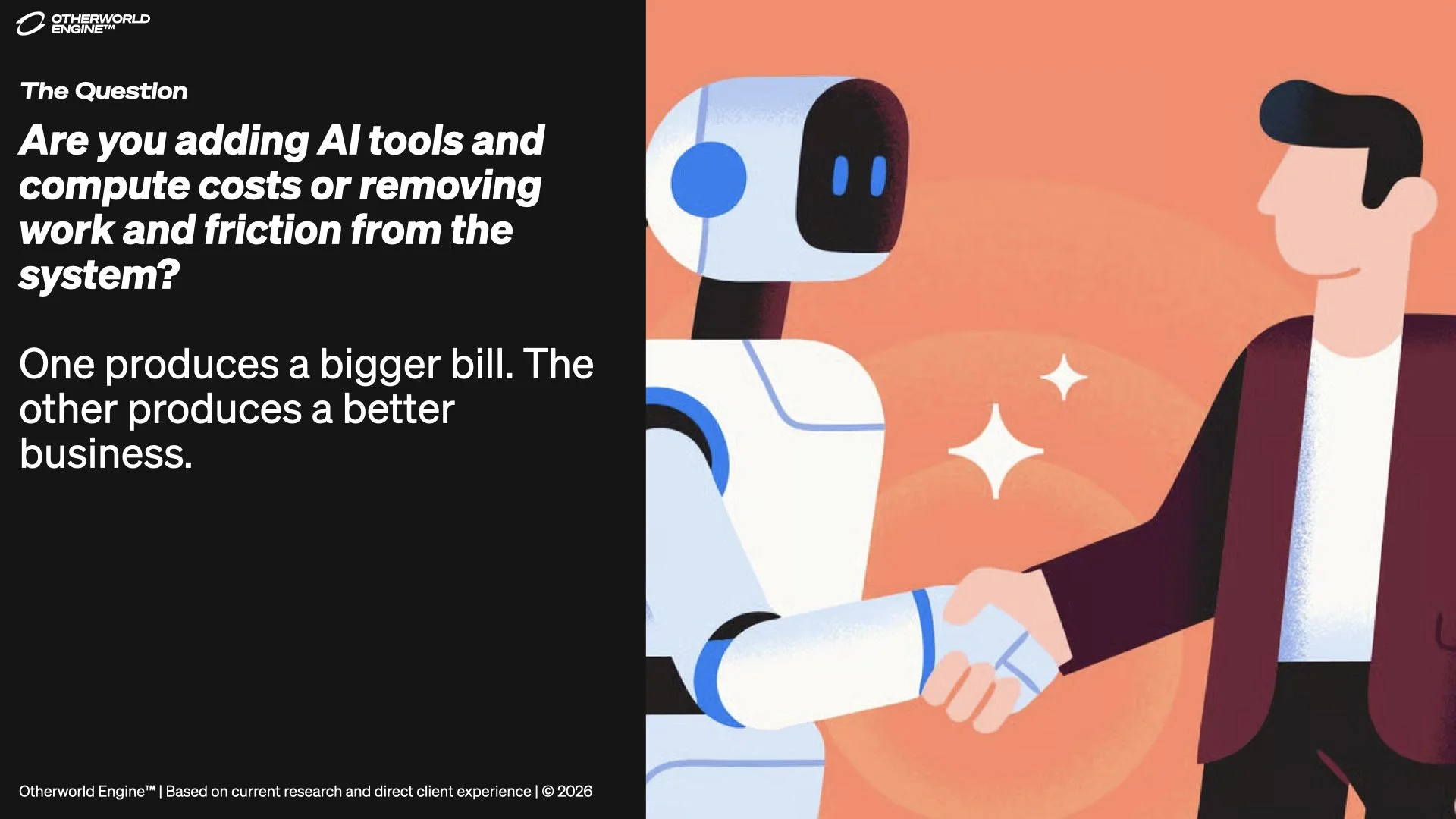
"You're adding AI tools and compute costs without removing work and friction from the system. Stop optimizing the process. Redesign it.” — Otherworld Engine™ Business Intelligent Performance Engineering