60% of Companies See Minimal AI Gains. Here's What the 5x Leaders Did Differently.
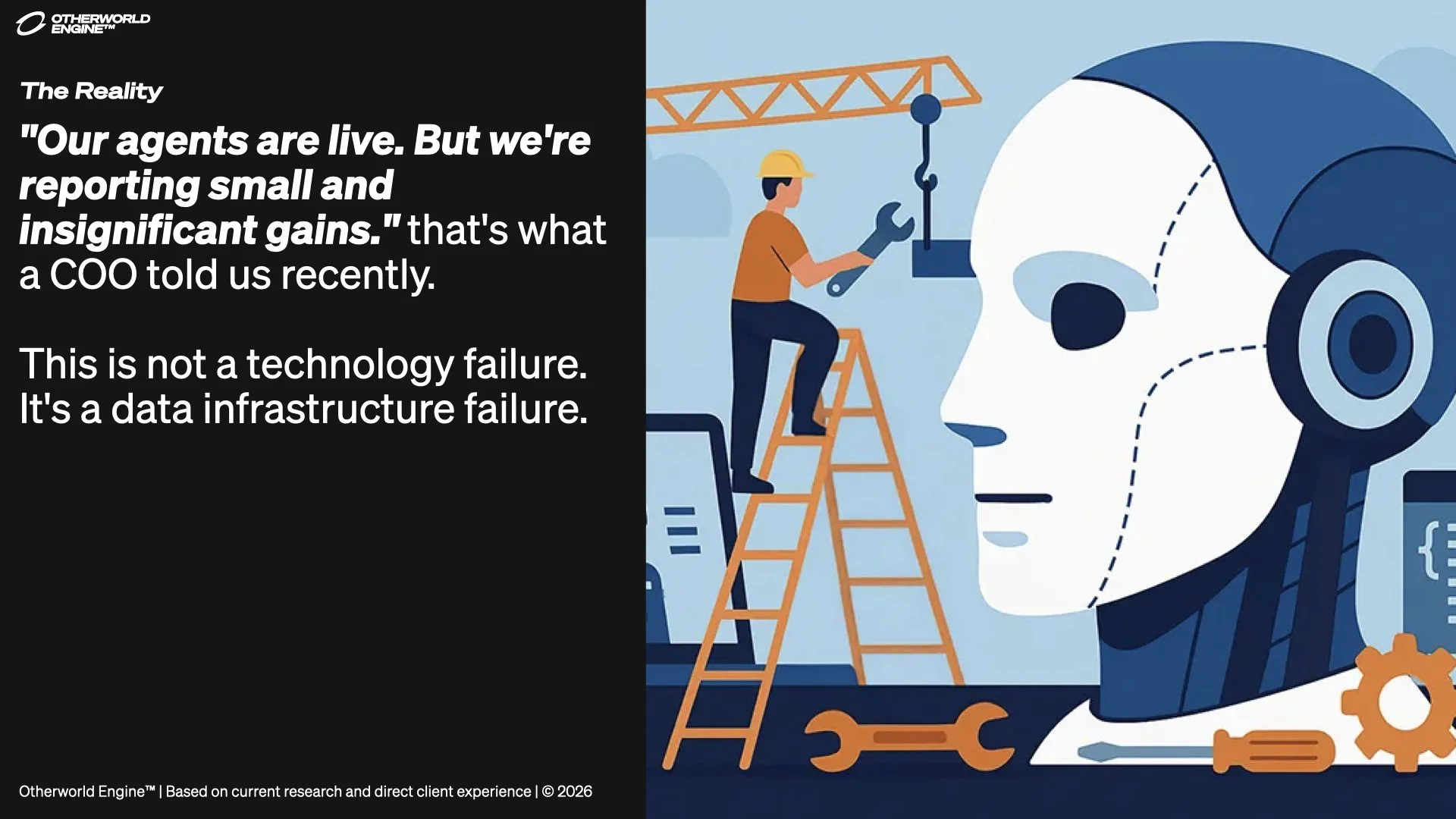
"Our agents are live, but we're reporting small and insignificant revenue and cost gains,” that’s what an asset management COO told us recently. This is where enterprise AI is breaking down.
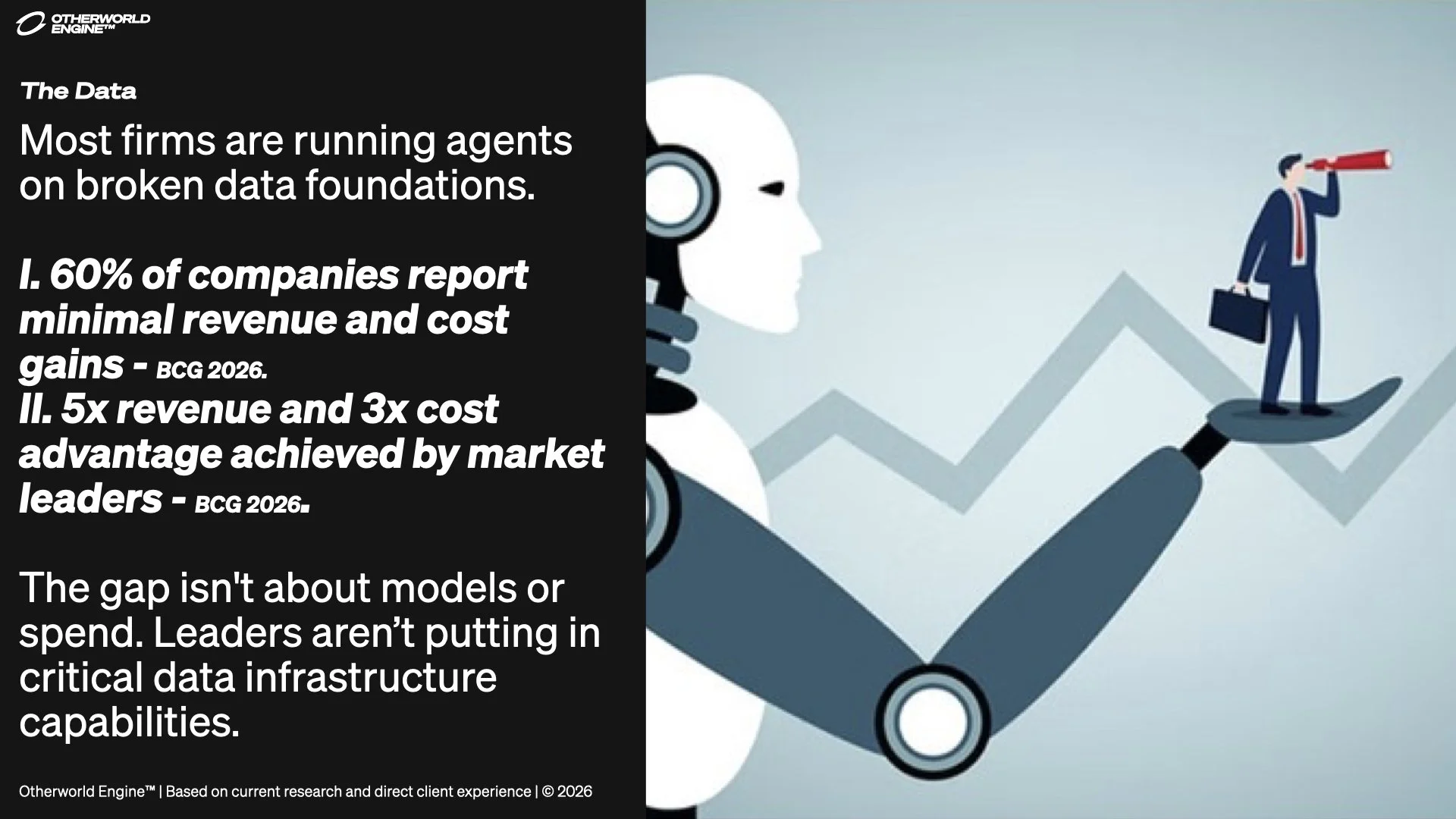
BCG research shows 60% of companies report minimal revenue and cost gains from AI despite substantial investment. However, market leaders achieved (5x) five times the revenue increases and (3x) three times the cost reductions. The gap isn't about models or spend. Leaders are putting in critical data infrastructure capabilities.
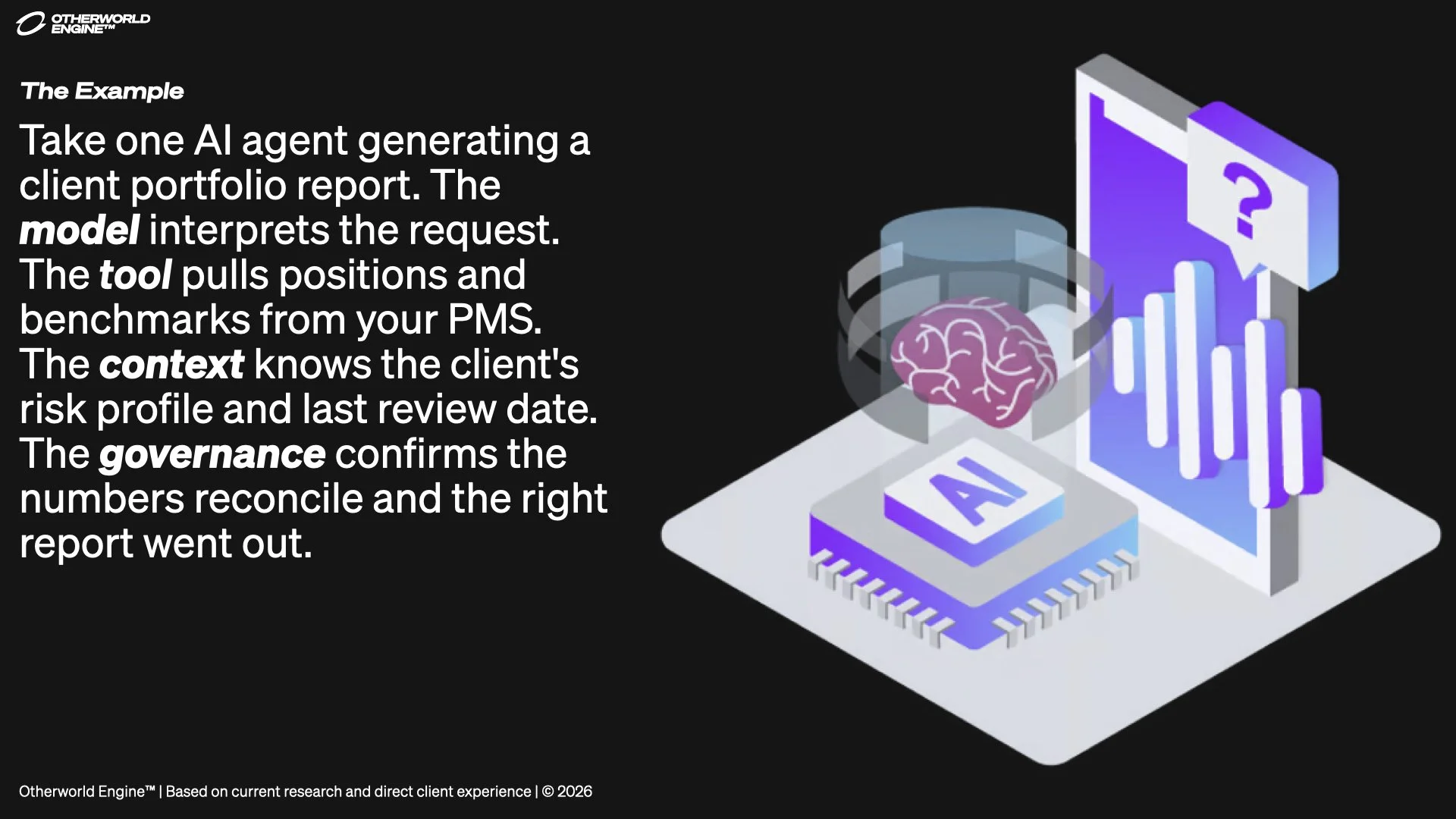
Think about a simple agentic task. An agent that generates a client portfolio report. The model interprets the request. The tool pulls positions, performance data, and benchmarks from your portfolio management system. The context knows this client holds a concentrated equity position, is in a drawdown conversation, and last reviewed their allocation three months ago. The governance confirms the numbers reconcile, the disclosures are current, and the report that went out is the one that was approved. Four (4) dimensions. Four potential failure points. Now multiply that across every client, every reporting cycle, across your entire book.
When an agent fails, the diagnosis lives in one of these quadrants. Did the model misunderstand intent? Was the API unavailable? Was the context incomplete? Or was there no mechanism to verify the outcome at all?
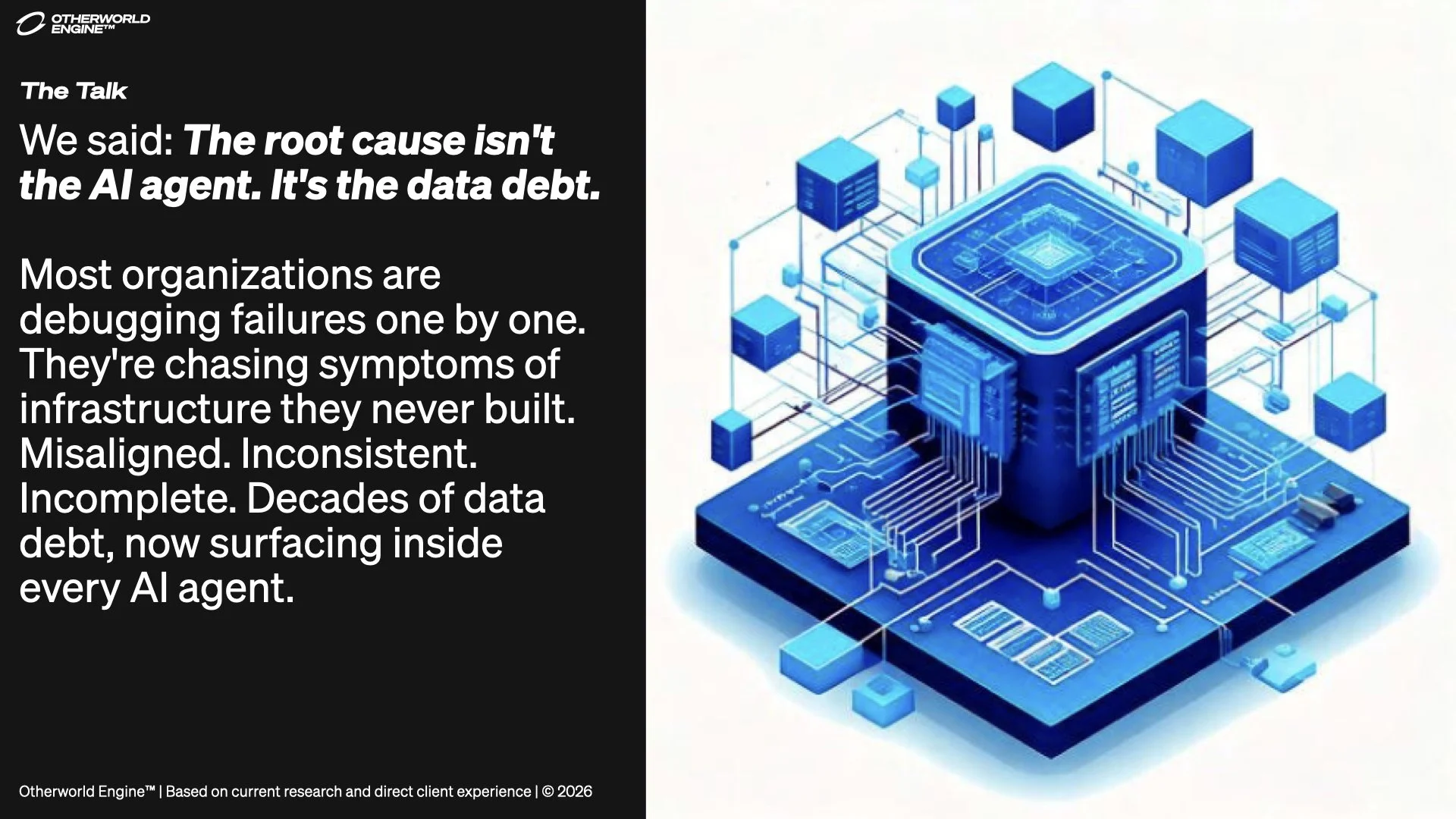
Most organizations are debugging agents one issue at a time. They’re chasing problems that originate in data infrastructure they never built. The root cause of most misbehaving and unreliable agents is misaligned, inconsistent, or incomplete data - a data debt accumulated over decades. Leaders will win if those systems operate from the same truth. This ensures that when agents reason, plan, and act, they do so based on accurate, consistent, and up-to-date information.
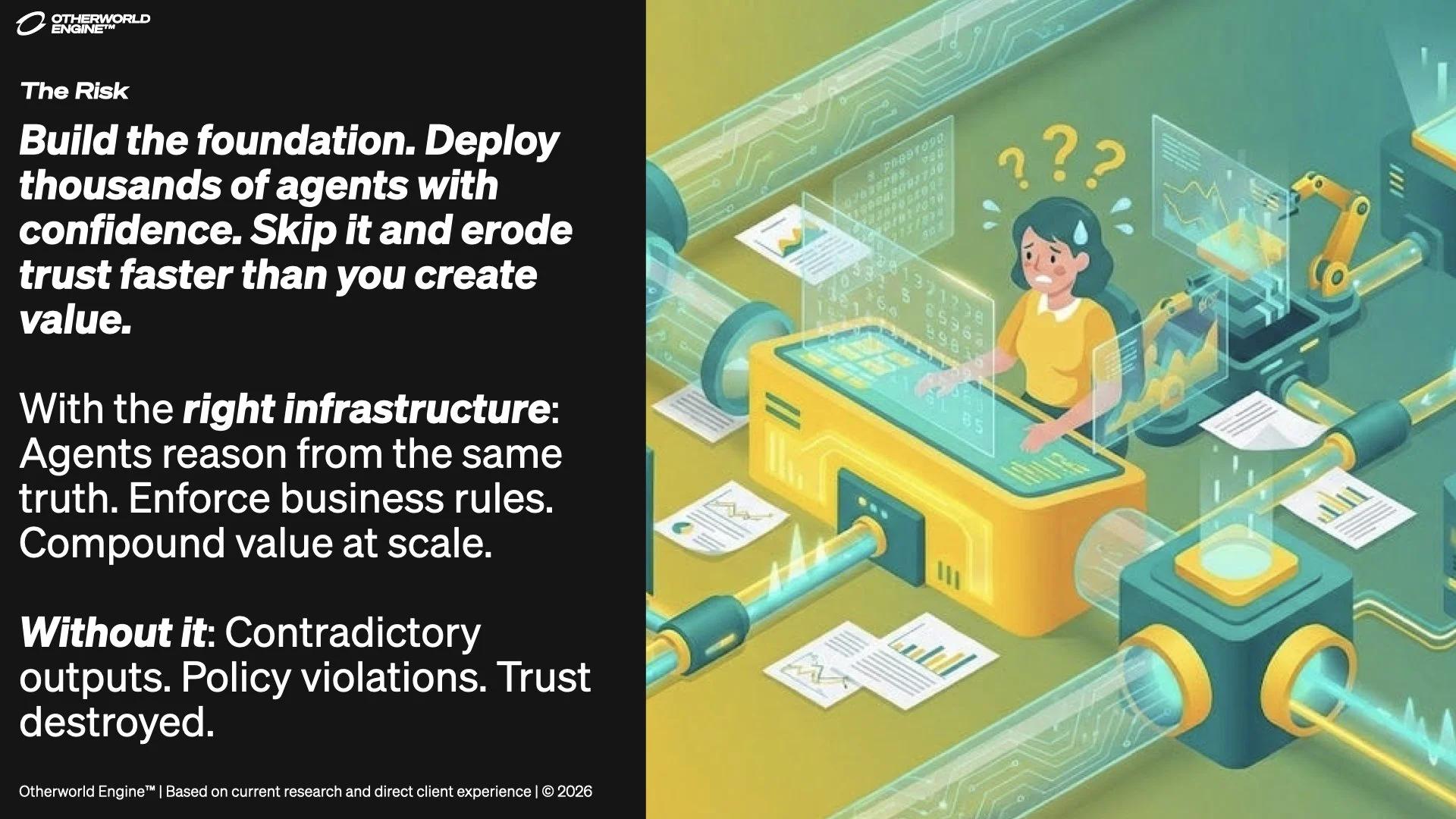
The COOs generating real value built the data foundation first. Because in an agentic world, data isn't an input. It's the infrastructure. Do this right and you can deploy +1,000s of agents with confidence. Agents that work together coherently, enforce business rules, and compound value at scale. Skip it and your agents produce contradictory outputs, violate policies, and erode trust faster than they create value.
Is your organization fixing agent failures one by one, or building the foundation that stops them from happening?