
How to Tell If An Asset Manager's AI Is Actually Working.
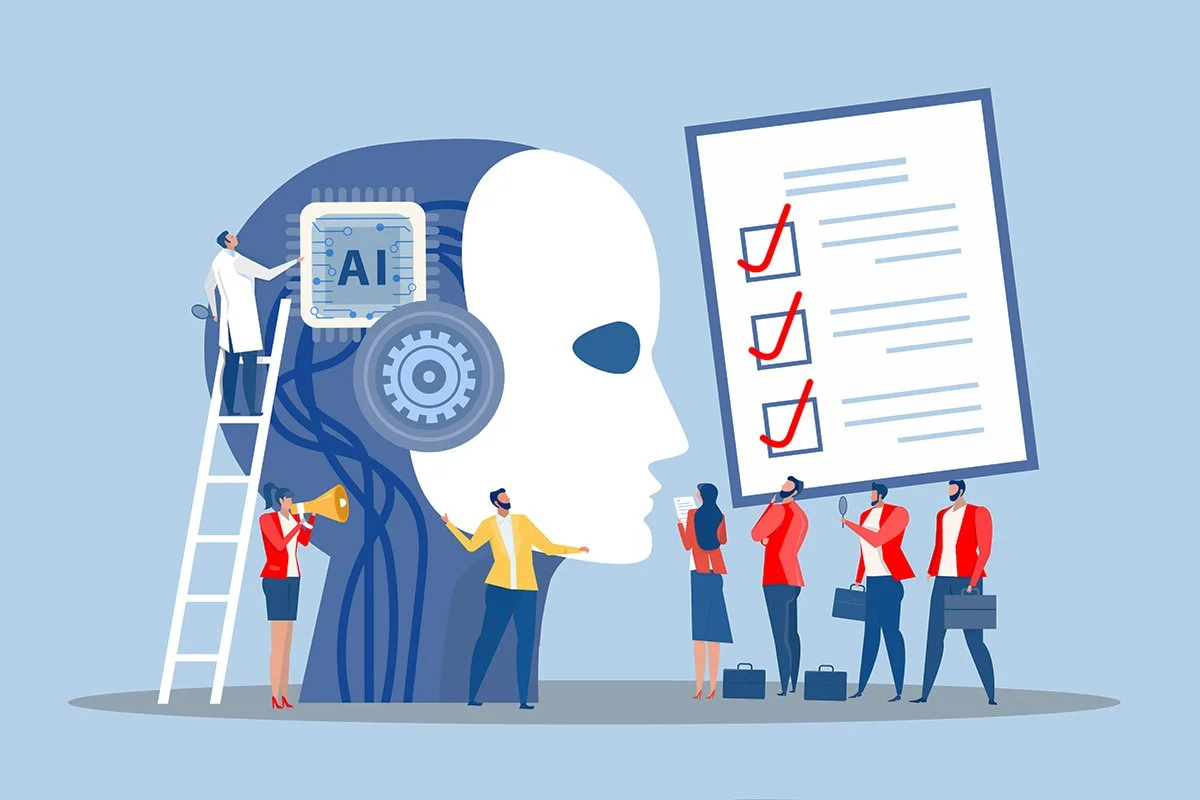
Every asset manager you speak to is using AI. At least, that's what they'll tell you. But "we use AI" has become the new "we have a robust process." It sounds reassuring. It signals modernity. And like most reassuring signals, it tells you almost nothing.
The real question isn't whether you’re an asset manager is using AI. It's whether that AI is actually doing anything useful.

Three data points suggest most of it isn't.
1. Gartner surveyed 782 leaders in late 2025 and found that only 28% of AI use cases fully succeed and meet ROI expectations, while 20% fail outright.
2. Forrester found that fewer than one third of decision makers could connect the value of AI to their organization's financial growth and is now projecting that enterprises will defer a quarter of their planned AI spend as a result.
3. Cisco surveyed 8,000 organizations and found that while 98% reported urgency to deploy AI, only 13% were actually prepared to do it.
Three independent research firms. One consistent pattern. "We use AI" is, more often than not, hype wearing a process hat.

Asset management is no exception. Mercer's 2026 AI in Asset Management Survey, covering 131 asset managers globally, gives us a picture of what's going on. And it's uneven.
55% report AI is integrated into at least one part of their investment process. But most of that integration sits at the edges — research support, data processing, summarizing information faster. When it comes to the parts that actually move the needle — portfolio construction, trade execution, real risk management — adoption drops off sharply. Only 6% of managers say AI is involved in actual decision making.
The performance claims deserve equal scrutiny. Better operational efficiency?69% of managers cited that.Faster insights? 55% saw improvements. But improved returns or meaningfully reduced risk? Just 8% could point to either. AI's making teams faster. It isn't yet, for most asset managers, making portfolios better. There's a meaningful difference between a faster process and a better one, and right now, the industry's largely delivering the former while describing it as the latter.

When we engage early on with asset managers, we look for three things as part of our 'Business Performance Engineering' approach to separate genuine capability from dressed up experimentation. We rarely find all three in place. Which is exactly the problem and exactly the work.
1. What problem is AI actually solving?
It shouldn't just be "enhancing our process." There should be something specific and materially impactful. Is it finding signals in datasets too large for humans to read? Running risk scenarios at a speed legacy systems can't match? If a manager can't describe the problem precisely, the solution probably isn't precise either. Vague problems produce vague systems. Vague systems produce vague results.
2. Where does AI sit in the workflow?
There's a meaningful difference between AI that helps an analyst research a company and AI that influences how much of that company ends up in the portfolio. Both can be legitimate. But they aren't the same thing, and it's worth knowing exactly which one you're looking at. The closer AI sits to capital allocation decisions, the more rigorous the governance needs to be, and the greater the potential to drive real investment performance.
3. Who's keeping this running?
Mercer's survey found 57% of firms have just 1 to 5 people dedicated to AI development and oversight. That's not a serious AI program. That's a checkbox for the board of investors. A team that small can't build, maintain, and monitor systems that touch live portfolios, and when one or two people leave, the capability often leaves with them. It's worth asking whether what you're looking at is a genuine competitive investment or a headcount footnote dressed up as a strategy.
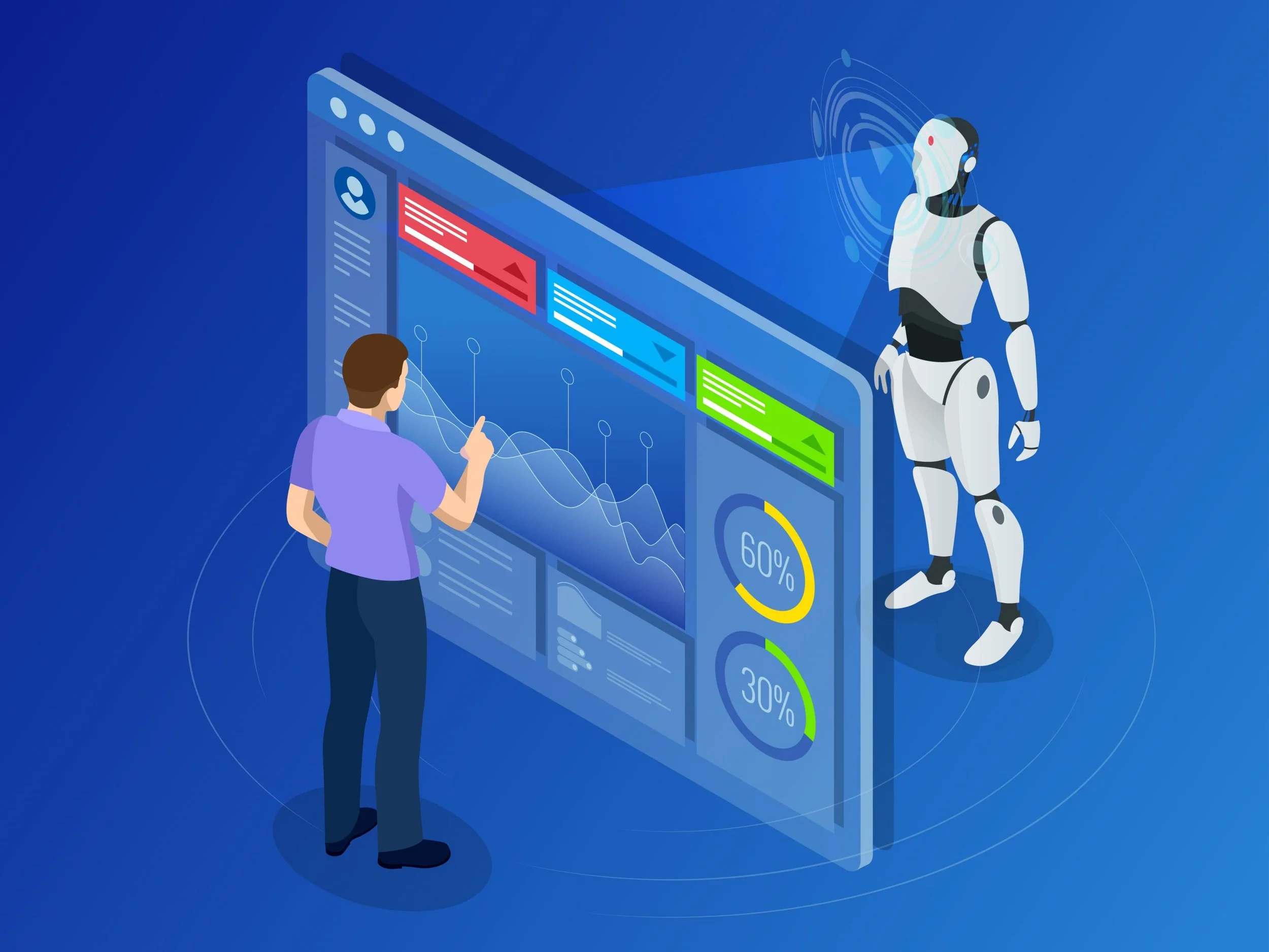
AI adoption on its own isn't a signal of business advantage. An asset manager without it isn't automatically behind. An asset manager with it isn't automatically ahead.
What actually matters is whether AI is capturing a real business opportunity — one where a defined investment problem is being solved, supported by robust governance, validated with empirical discipline, and monitored in production. Purposeful and provable. Not just impressive sounding.
That's how Otherworld Engine™ builds. Every engagement starts with a defined business problem and a clear line to P&L impact, not a technology roadmap. We assemble performance systems on proven finance foundations, validate outcomes in live operations through our Performance Co-Engineering method, and only scale what the proof and evidence supports. We don't measure success in adoption metrics or AI feature counts. We measure it in business performance. That discipline is what separates an engine built to win from a process built to impress.
The asset managers we find most credible are the ones who can tell you exactly what AI does and doesn't do in their process, and why that's the right call for their strategy. That kind of clarity is harder to fake than a polished pitch deck.
AI in asset management is real. It's growing. It matters. But the question worth asking isn't "are you using AI?”
It's "can you prove it's driving business performance?"