Why Agentic AI Pilots Fail in Production And What COOs Must Do Differently?

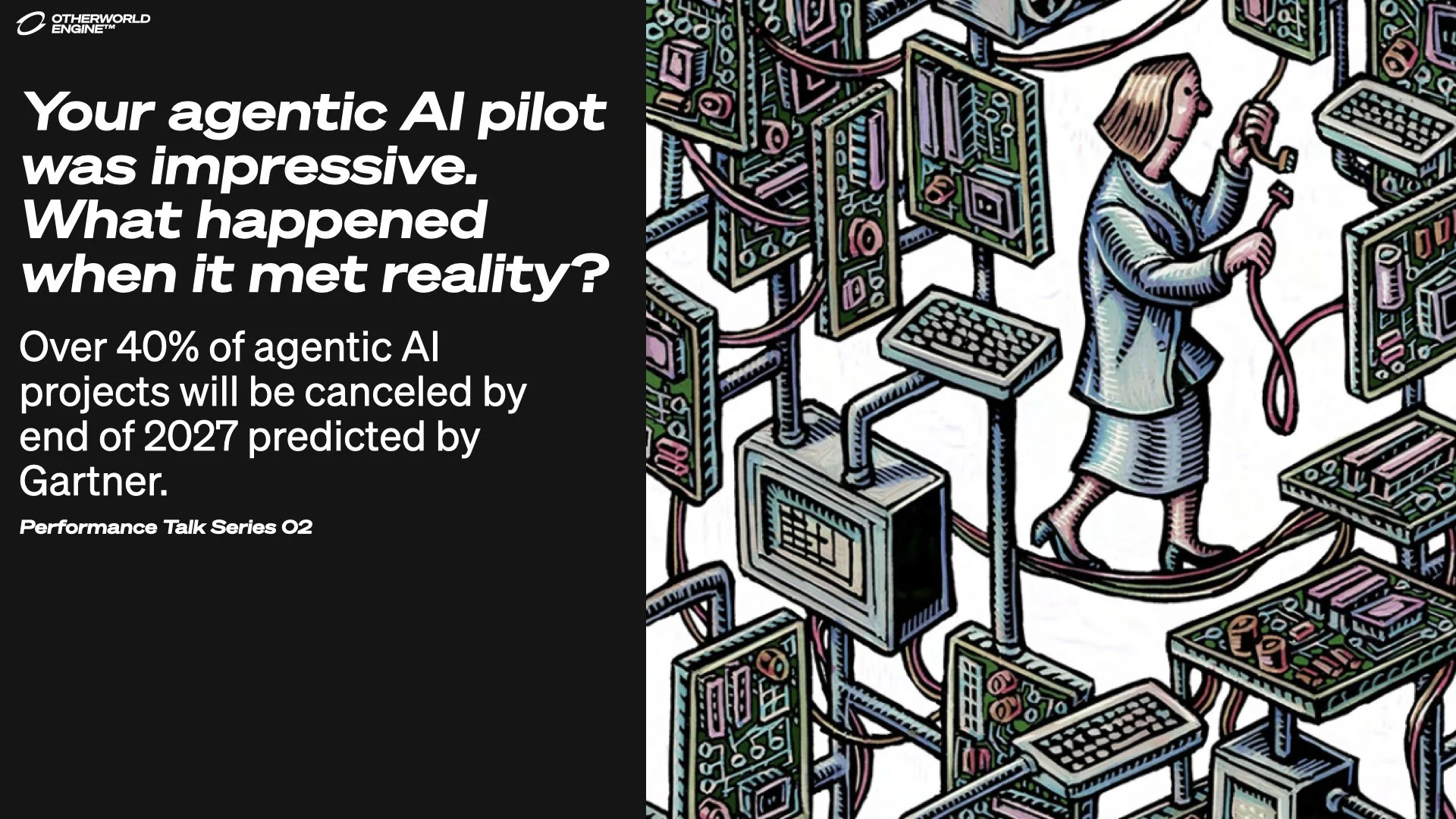
"We built the agentic AI prototype. The demo was impressive. Then we tried to run it in production and everything broke," that's what a COO told us recently on a call. And it's becoming one of the most common conversations we're having.
Here's the challenge about agentic AI. Prototypes are built for perfect conditions. Clean inputs. Cooperative users. Consistent model behavior. Production is none of those things.
Gartner predicts over 40% of agentic AI projects will be canceled by end of 2027, driven by escalating costs, unclear business value, and inadequate risk controls. That's not a technology failure. That's a readiness failure.
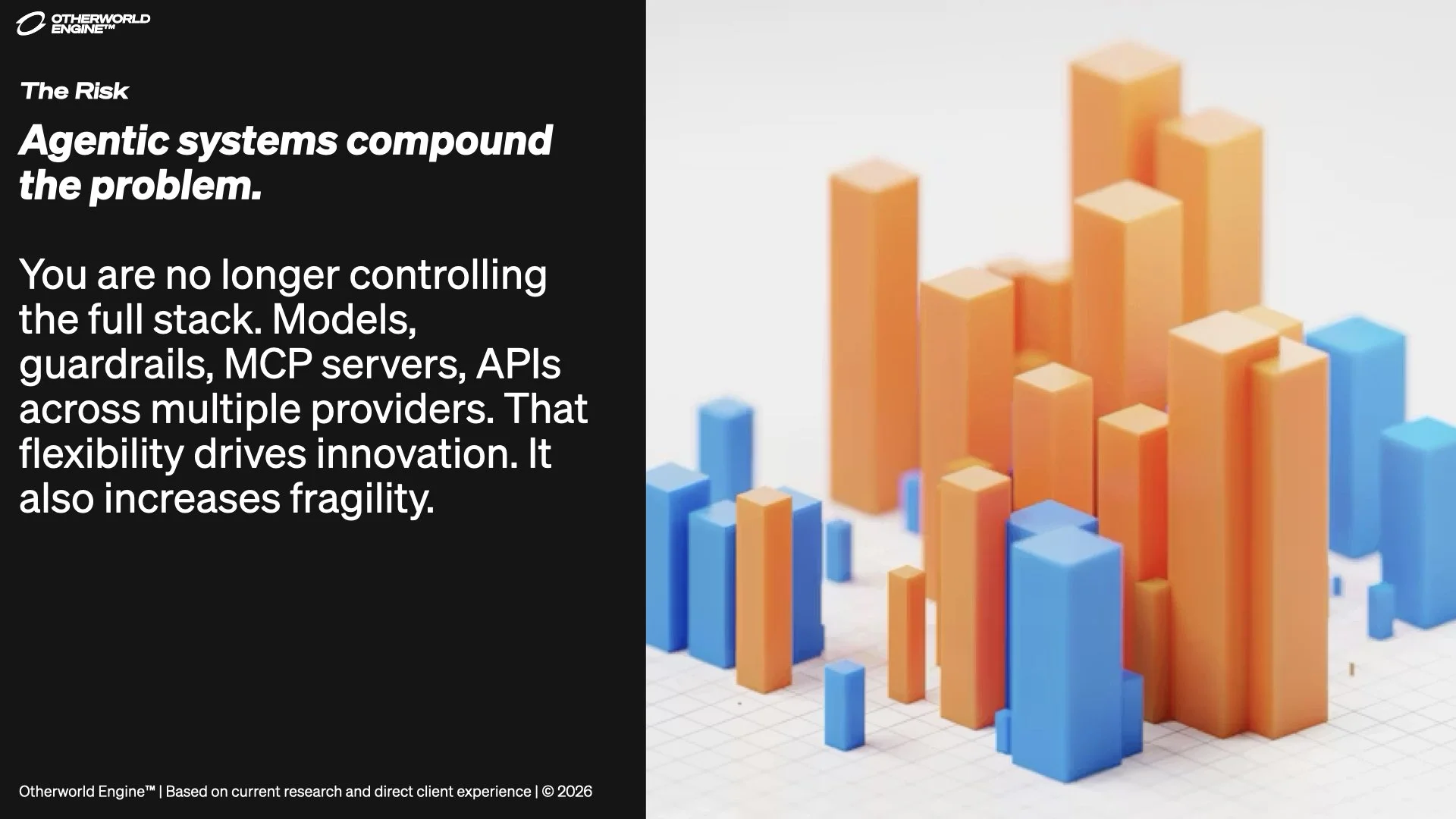
Agentic systems compound the risk further. In older ML environments, organizations largely controlled the full stack. Today, they're composing systems from models, guardrails, MCP servers, and APIs across multiple providers. That flexibility drives innovation. It also increases fragility. And reliance on shared external infrastructure introduces a completely different class of risk compared to traditional ML.
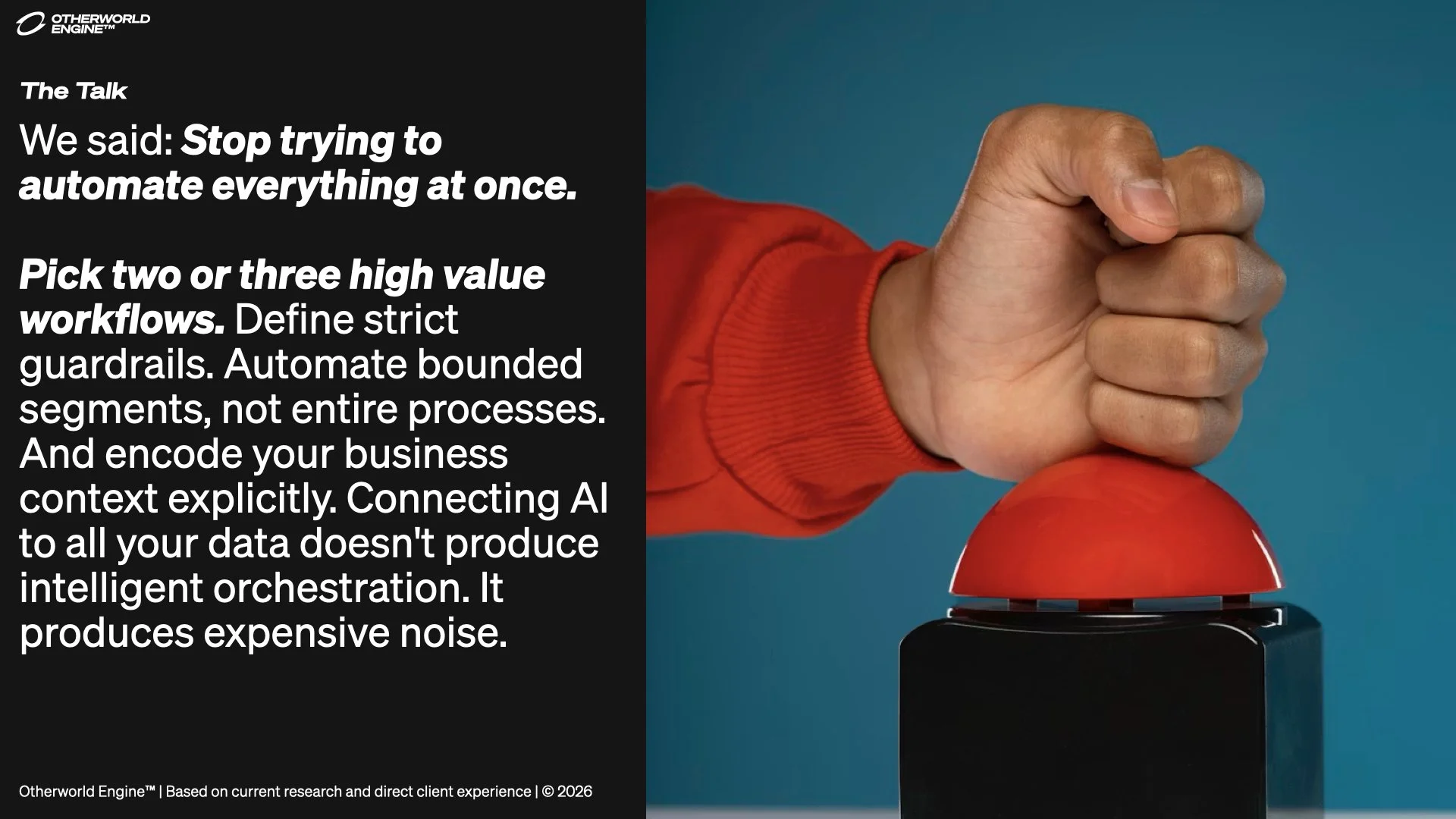
So what do we tell this COO? Stop trying to automate everything at once. Pick two or three high value workflows. Define strict guardrails. Automate bounded segments, not entire processes. And encode your business context explicitly. Connecting AI to all your data doesn't produce intelligent orchestration. It produces expensive noise.
AI doesn't remove the need for management discipline. It raises the stakes for it.
The COOs getting this right aren't the ones with the most ambitious agents. They're the ones with the clearest boundaries.
What's the biggest gap you're seeing between your agentic AI pilots and production reality?