The Four Tensions Facing Every Leader With Agentic AI.
"I want to capture value from agentic AI without introducing new risks," a CEO at an asset management firm told us recently.
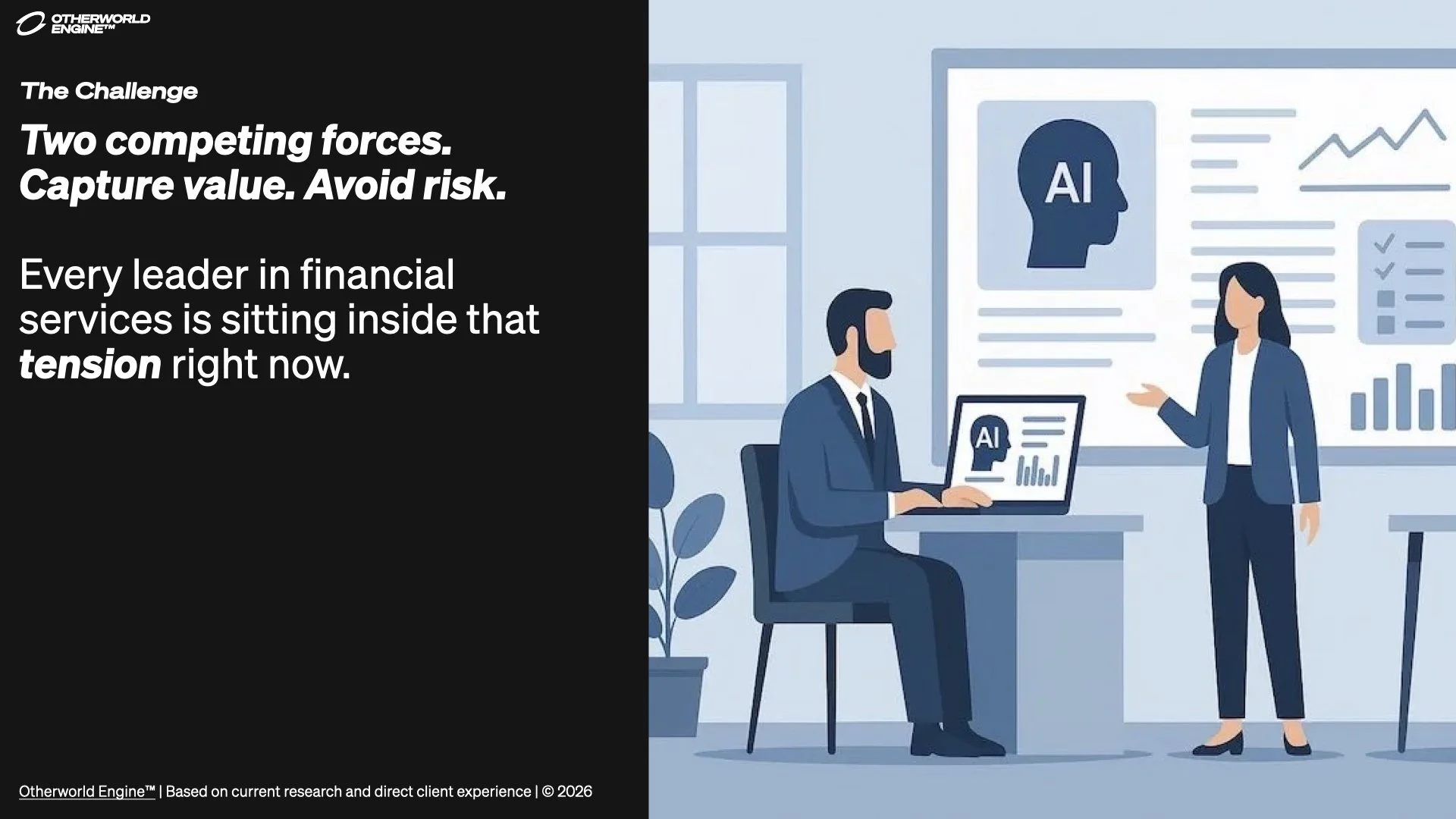
One sentence. Two competing forces. Capture value. Avoid risk. Every leader in financial services is sitting inside that tension right now whether they've said it out loud or not for their AI programs.
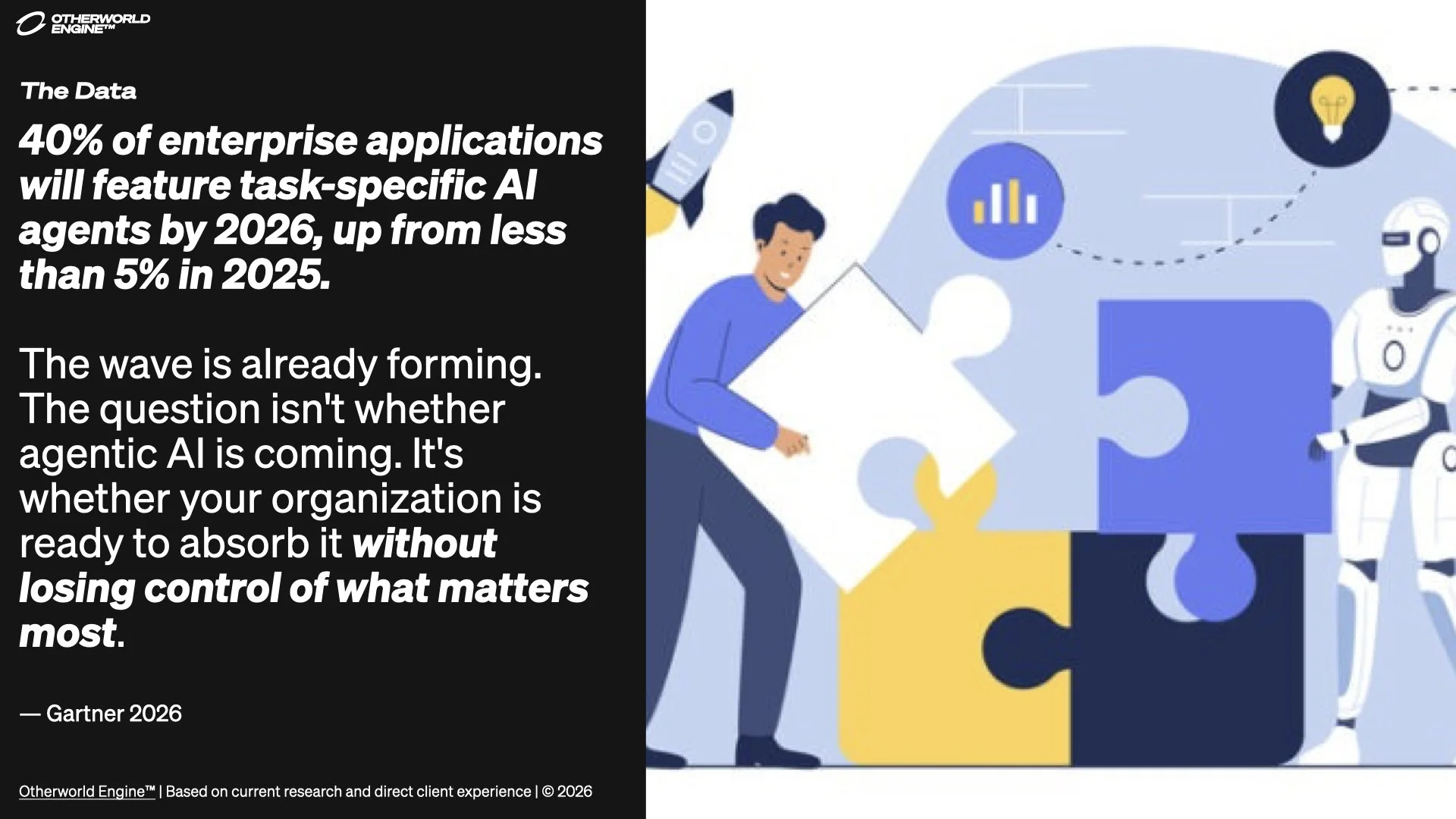
Gartner predicts 40% of enterprise applications will feature task-specific AI agents by 2026, up from less than 5% in 2025. The wave is already forming. The question isn't whether agentic AI is coming. It's whether your organization is ready to absorb it without losing control of what matters most.
We told that CEO there are four tensions every organization will face. Not obstacles. Not risks to avoid. Tensions to navigate. The difference matters because tensions don't get resolved. They get managed.
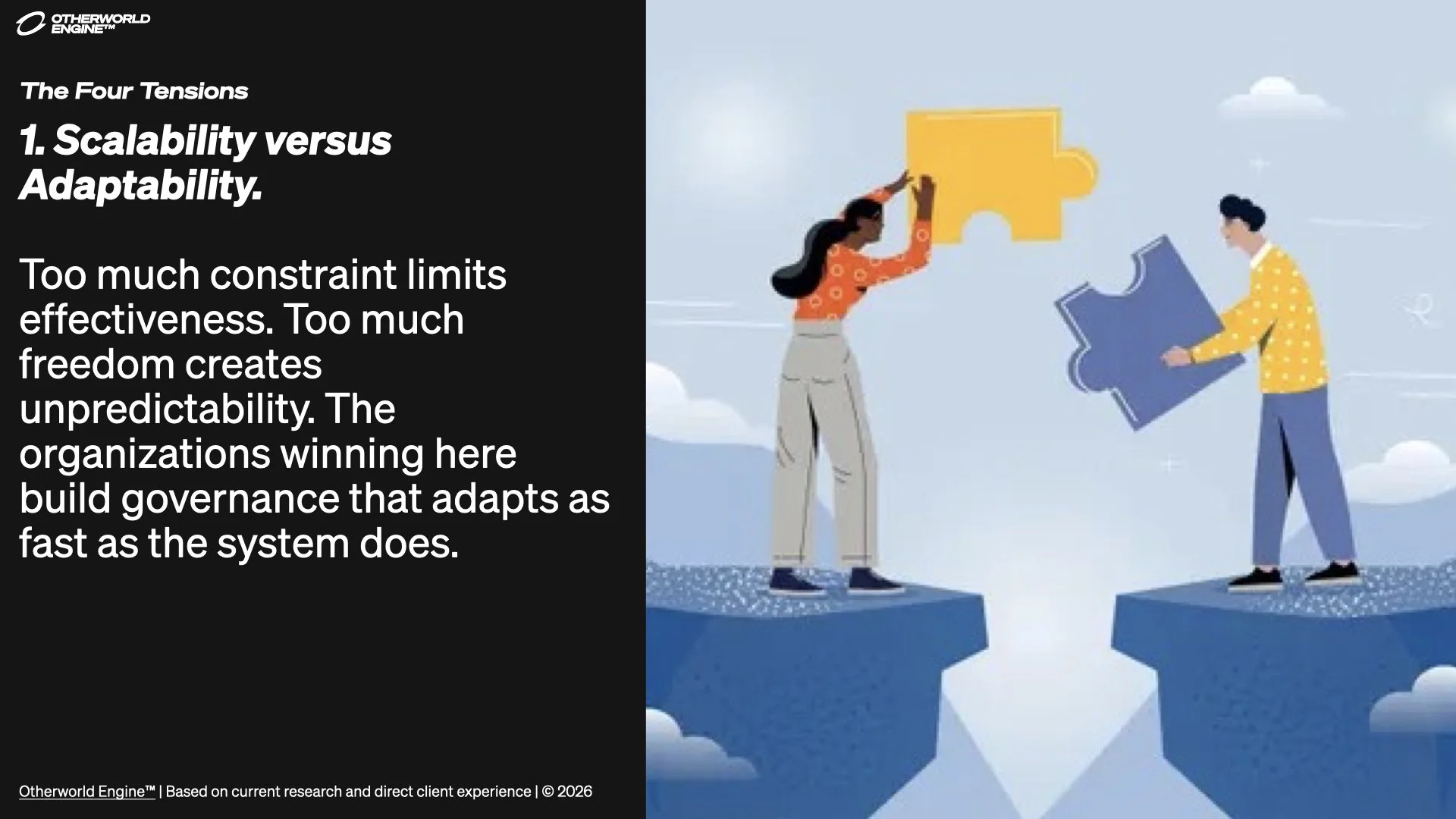
1. Scalability versus adaptability. Too much constraint limits effectiveness. Too much freedom creates unpredictability. The organizations winning here build governance that adapts as fast as the system does.
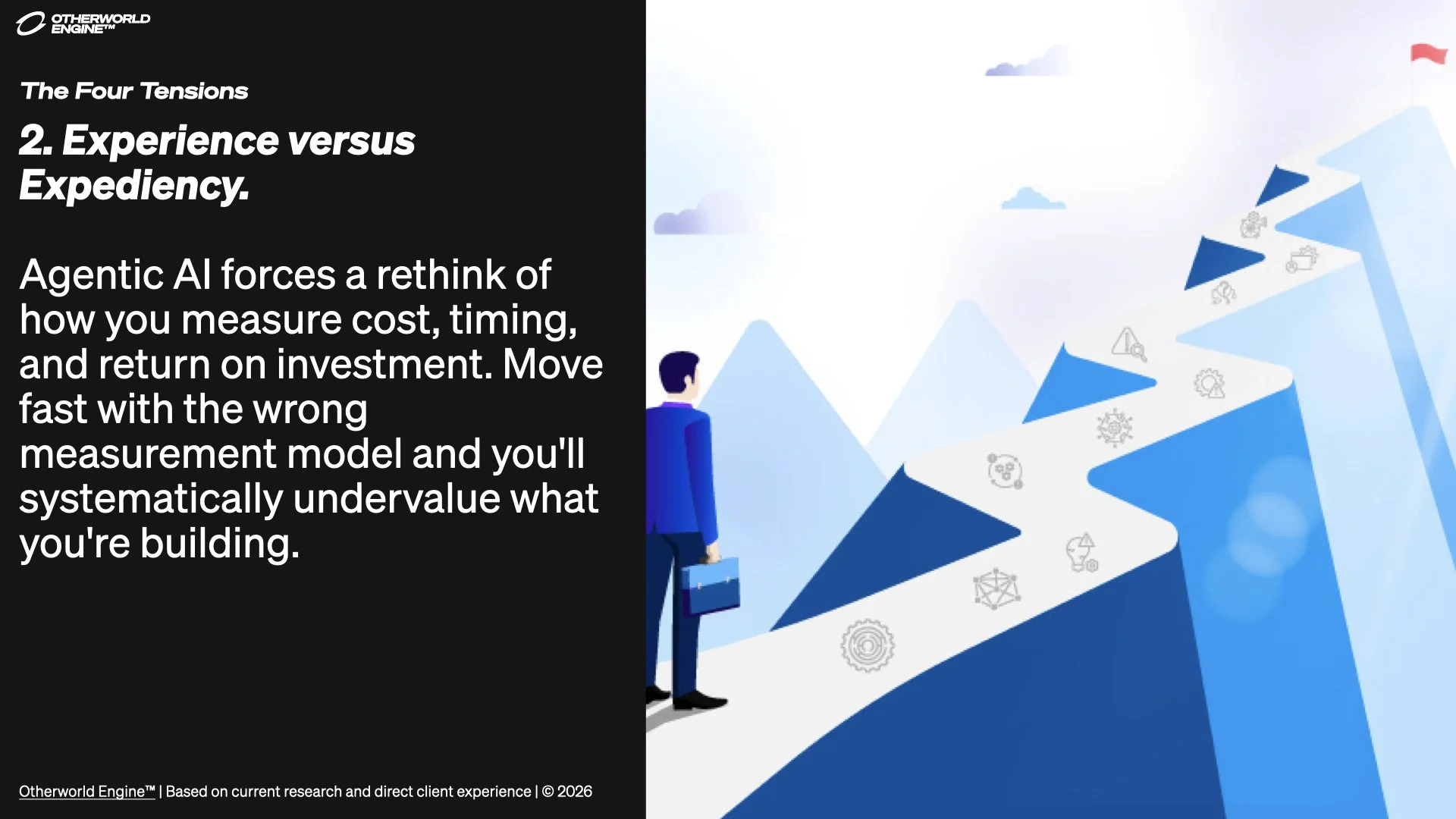
2. Experience versus expediency. Agentic AI forces a rethink of how you measure cost, timing, and return on investment. Move fast with the wrong measurement model and you'll systematically undervalue what you're building.
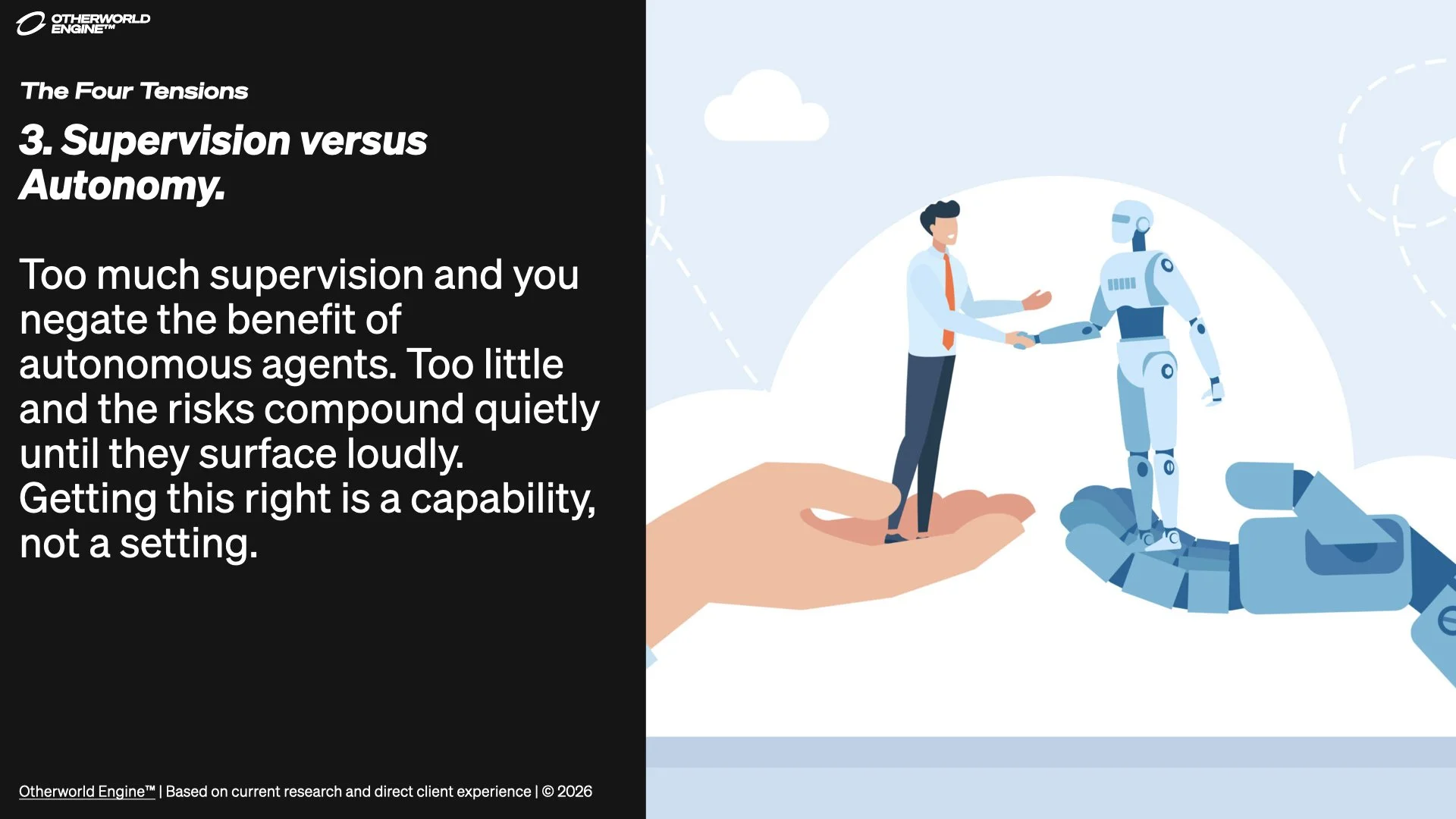
3. Supervision versus autonomy. Too much supervision and you negate the benefit of autonomous agents. Too little and the risks compound quietly until they surface loudly. Getting this right is a capability, not a setting.
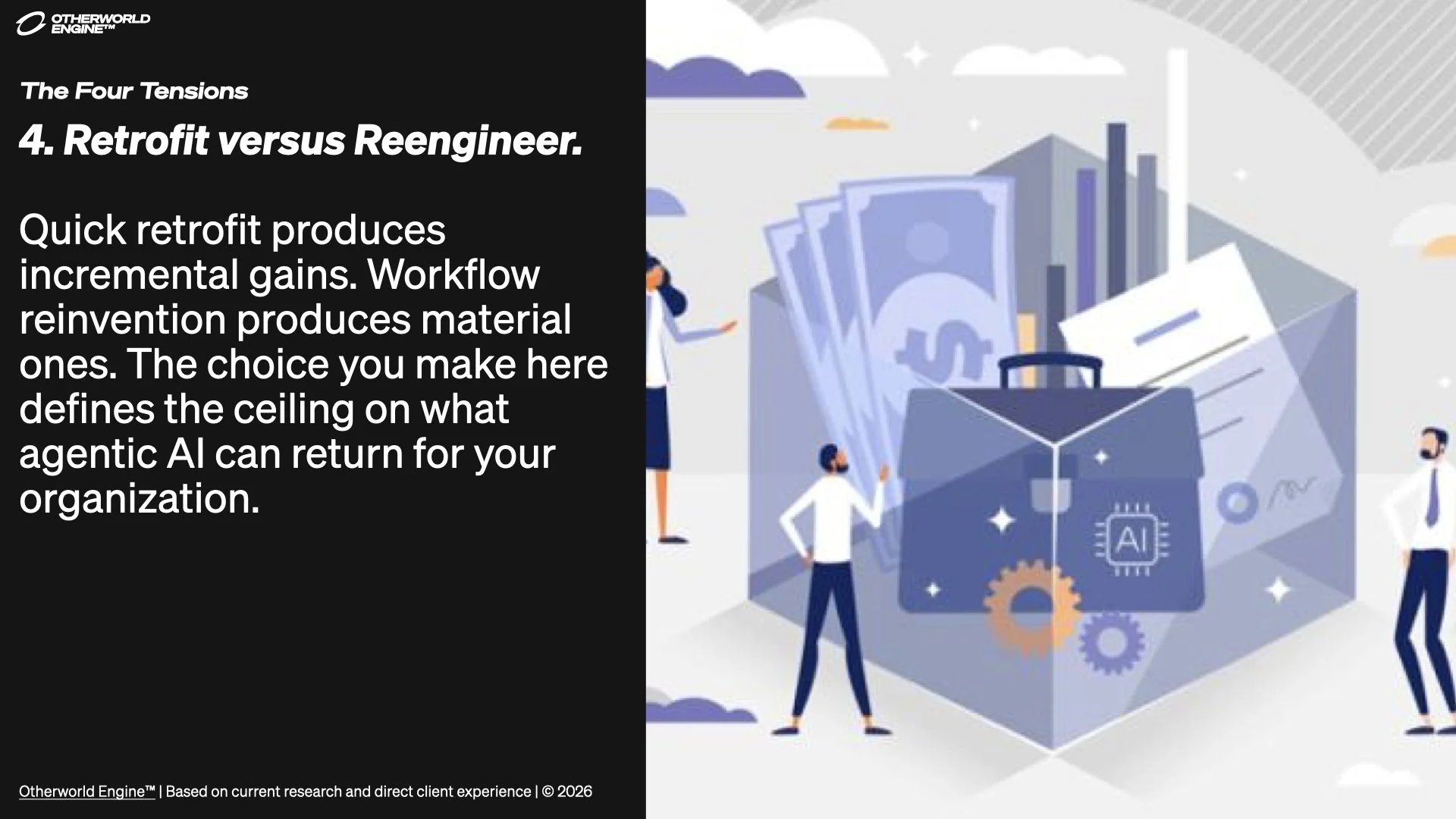
4. Retrofit versus reengineer. Quick retrofit produces incremental gains. Workflow reinvention produces material ones. The choice you make here defines the ceiling on what agentic AI can return for your organization.
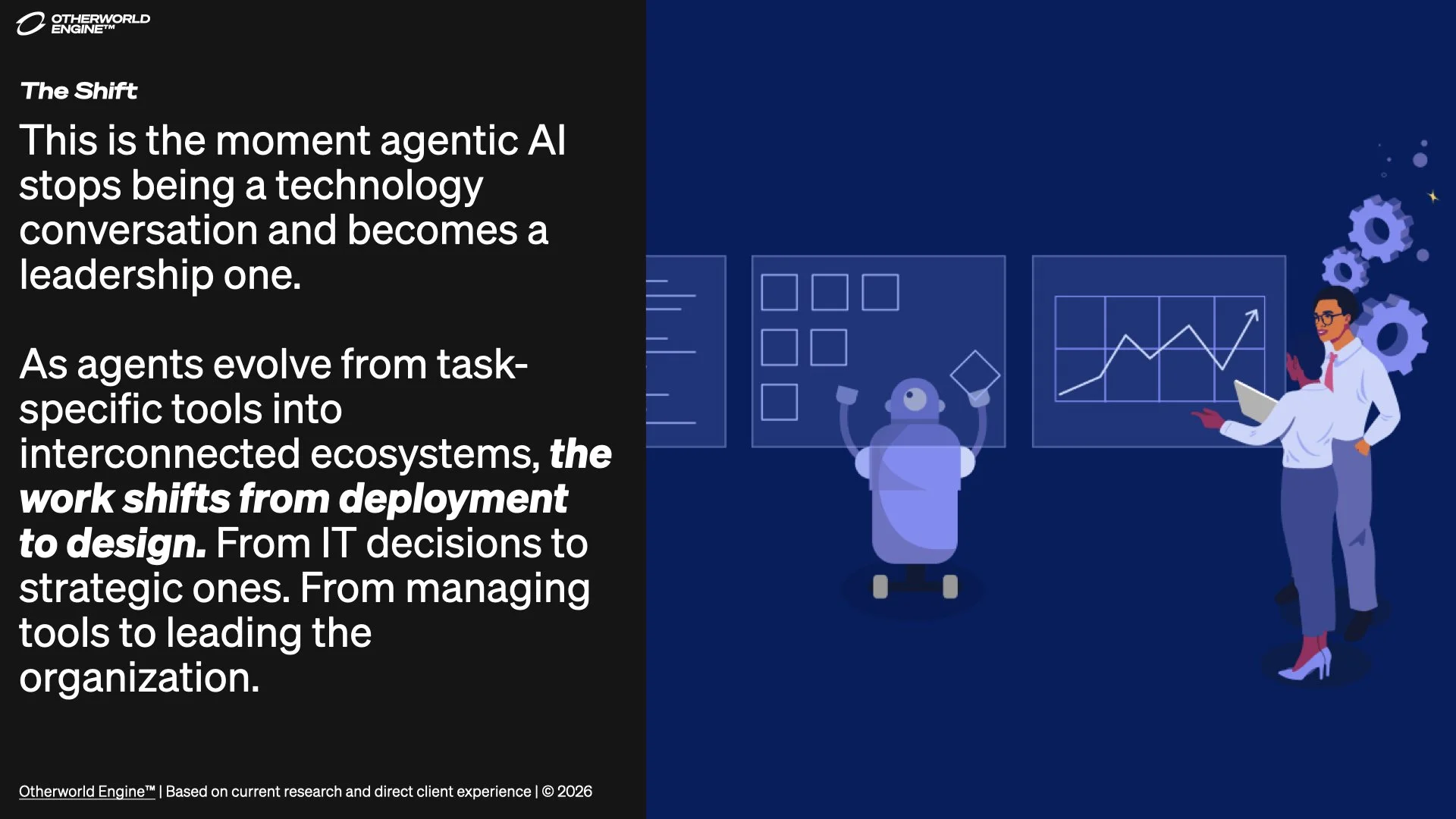
This is the moment agentic AI stops being a technology conversation and becomes a leadership one. As agents evolve from task-specific tools into interconnected ecosystems, the work shifts from deployment to design. From IT decisions to strategic ones. From managing tools to leading teammates.
The organizations that treat this as a management inflection point will build a compounding advantage. The ones that treat it as a software rollout will spend years managing the consequences.
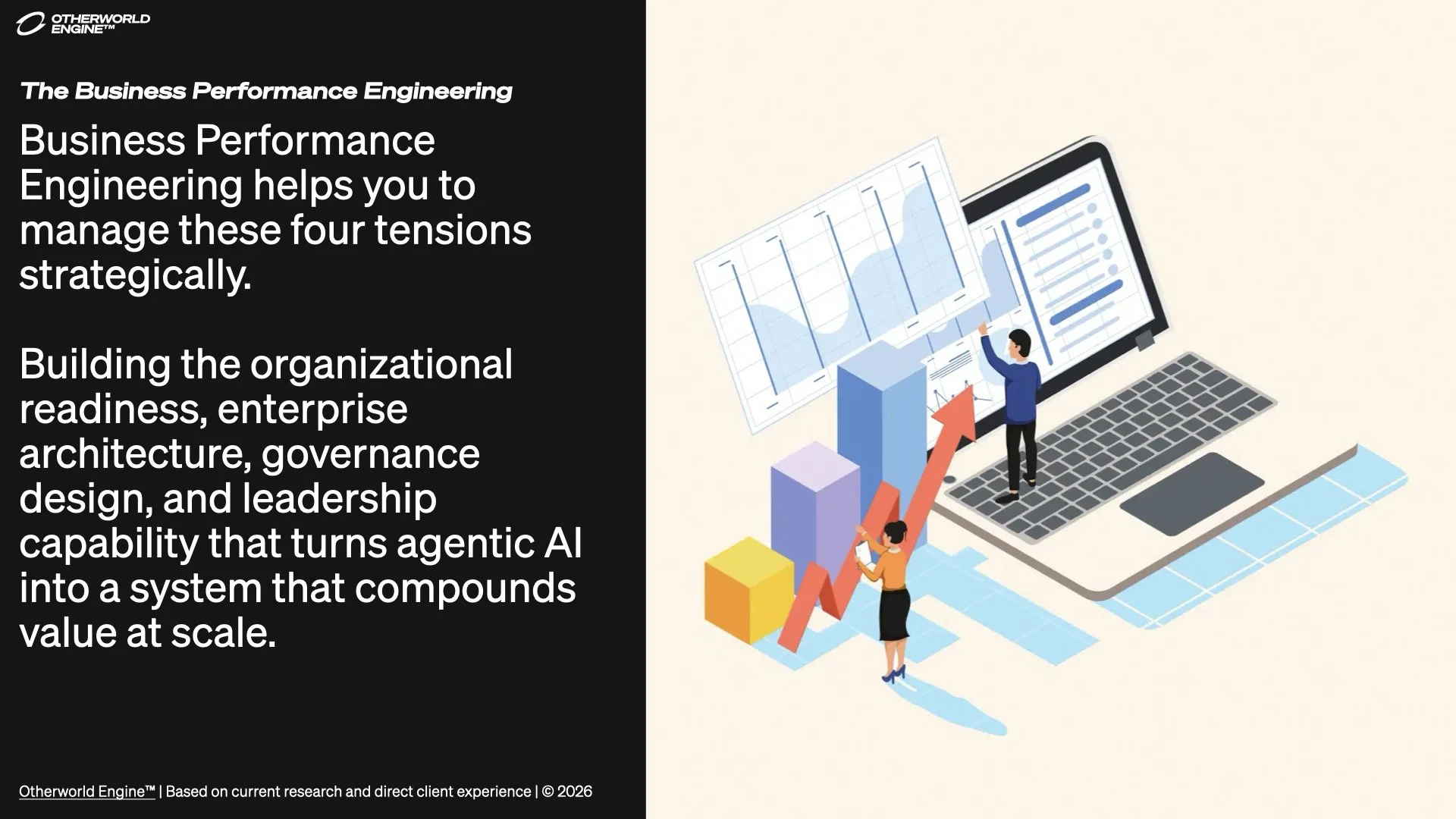
Business Performance Engineering is how you make that shift deliberately. Building the organizational readiness, governance design, and leadership capability that turns agentic AI into a system that compounds value at scale.
Are you navigating these four tensions deliberately or letting the pace of deployment make the decisions for you?